What it is
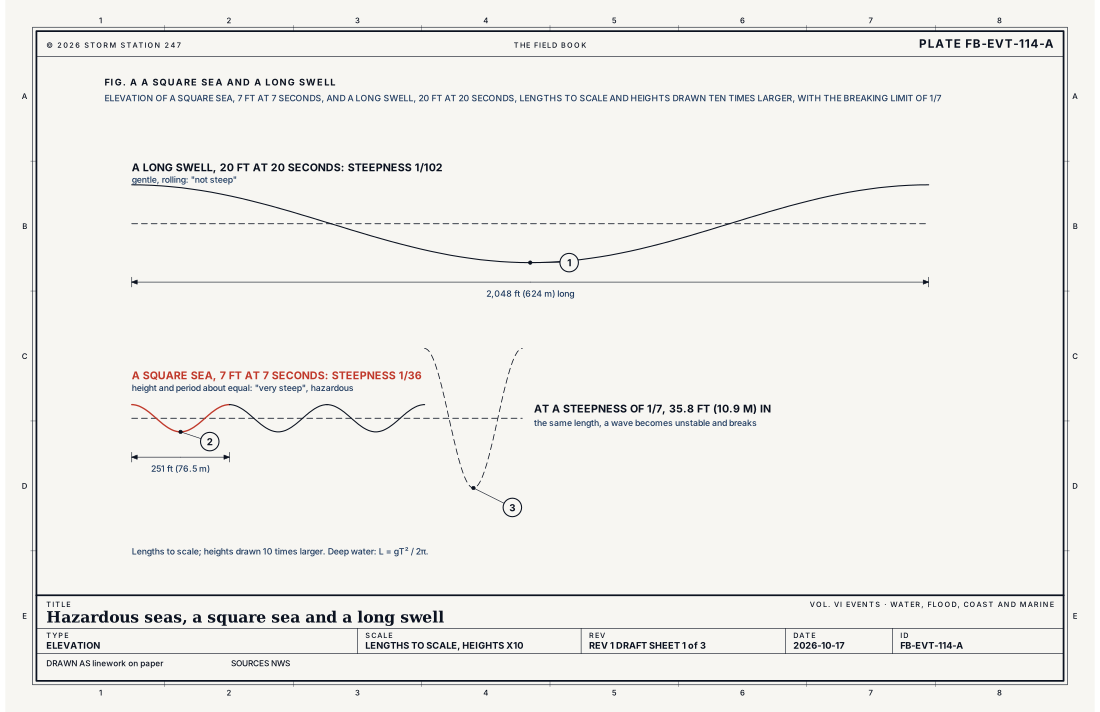
Hazardous seas are waves out on the open water steep enough, or high enough, to capsize or damage a vessel. It is not only the height of a sea that makes it dangerous. A tall swell with a long period rises and falls gently under a boat, while a lower sea with a short period comes in steep, close-packed walls that a boat cannot ride. Mariners call a sea "square" when its height in feet is about its period in seconds, such as 7 ft (2.1 m) at 7 seconds, and report such seas as hazardous.
The Weather Service warns them with a Hazardous Seas Warning when the height or the steepness of the waves meets the office's own criteria, and watches for them with a Hazardous Seas Watch when they are favored 12 to 60 hours ahead. Below the warning, a Small Craft Advisory covers seas of 4 ft (1.2 m) and more, or waves hazardous for their period or steepness. On the West Coast both are based in part on steepness, read from each office's table of height against period: at Eureka, a warning from 10 ft (3.0 m) at 8 seconds or less, rising to 16 ft (4.9 m) at 13 seconds, and at any period for 18 ft (5.5 m) or more. Fig. B draws Eureka's table and Medford's.
What it is not
It is not a gale or a storm, Gale, storm and hurricane force marine wind FB-EVT-113, warned for the wind's speed. Hazardous seas are warned for the waves, and in the directive's own example the Hazardous Seas Warning follows a Gale Warning, after the wind has eased and the steep seas remain.
It is not high surf, High surf FB-EVT-107: large waves breaking at the shore, a danger to people on the beach and the rocks. Hazardous seas are a danger to vessels out on the water.
Lookalikes
- Gale and storm force winds
- Warned for the wind's speed, Gale, storm and hurricane force marine wind FB-EVT-113. Hazardous seas are warned for the waves themselves, and can follow the wind once it has dropped.
- High surf
- Large waves breaking at the shore, High surf FB-EVT-107, a danger to people on the beach and rocks. Hazardous seas are out on the water, a danger to vessels.
- Rip current
- The flow breaking waves drive out to sea, Rip current FB-EVT-108.
Machine
Height, length and steepness
A wave's steepness is its height over its length. In deep water the length follows from the period alone, by the equation below: a wave of 7 seconds is 251 ft (76.5 m) from crest to crest, one of 20 seconds 2,048 ft (624 m). So the square sea of 7 ft at 7 seconds has a steepness of 1/36, and a swell of 20 ft at 20 seconds only 1/102, nearly three times gentler though nearly three times taller. Fig. A draws them to one scale. A wave cannot grow steeper than about 1/7: past that it becomes unstable and breaks.
Why the tables slope
The wind raises short, steep seas, and the longer it blows, the longer and taller they grow. The offices' tables call a short sea hazardous at a lower height than a long one: at Eureka, 10 ft at 8 seconds, but 16 ft at 13 seconds. Seas of 18 ft (5.5 m) or more are counted hazardous at any period, for reasons apart from steepness, such as the difference in the wind between the crests and the troughs of such high waves, which affects how a vessel handles. Long swell also changes as it nears land: where it feels the bottom it slows and steepens while its period stays the same. An 18 ft wave of about 16 seconds feels the bottom in about 650 ft (198 m) of water.
Seas from more than one source
At sea, a wind wave and one or more swells often run together, from different directions and with different periods. The Eureka office judges the steepest of the waves present or forecast: a 16 ft (4.9 m) swell that is steep earns an advisory though the wind wave beside it is not.
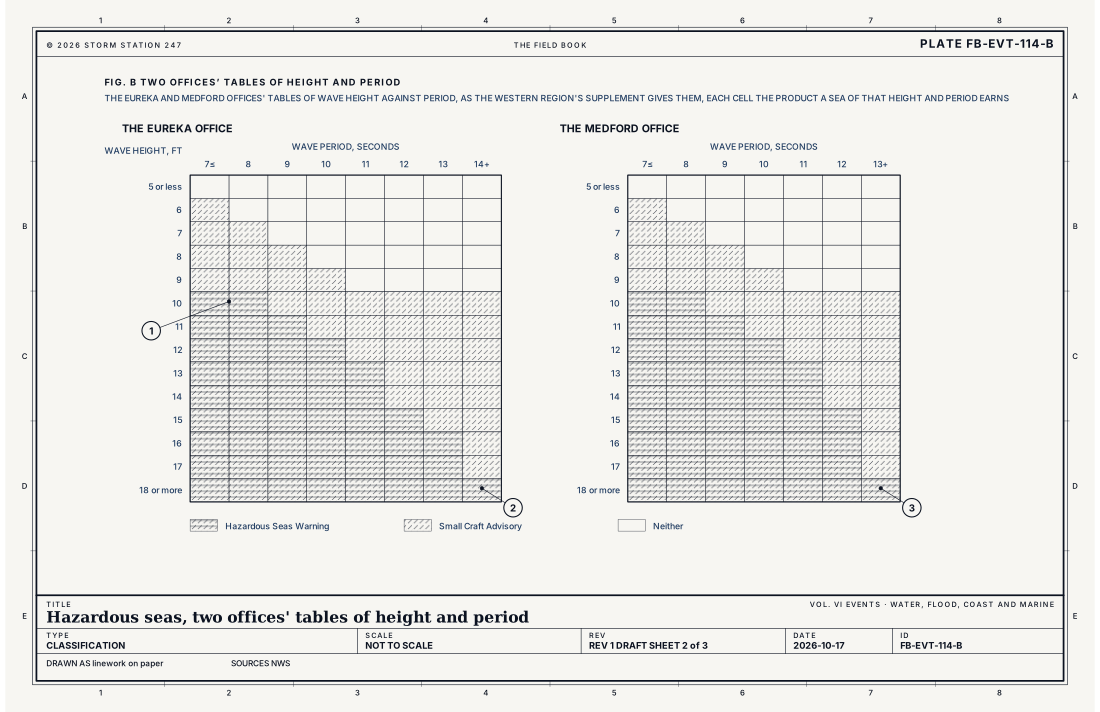
- Eureka: a warning from 10 ft (3.0 m) at 7 seconds
- Eureka: 18 ft (5.5 m) or more, a warning at any period
- Medford: 18 ft (5.5 m) or more, a warning at any period
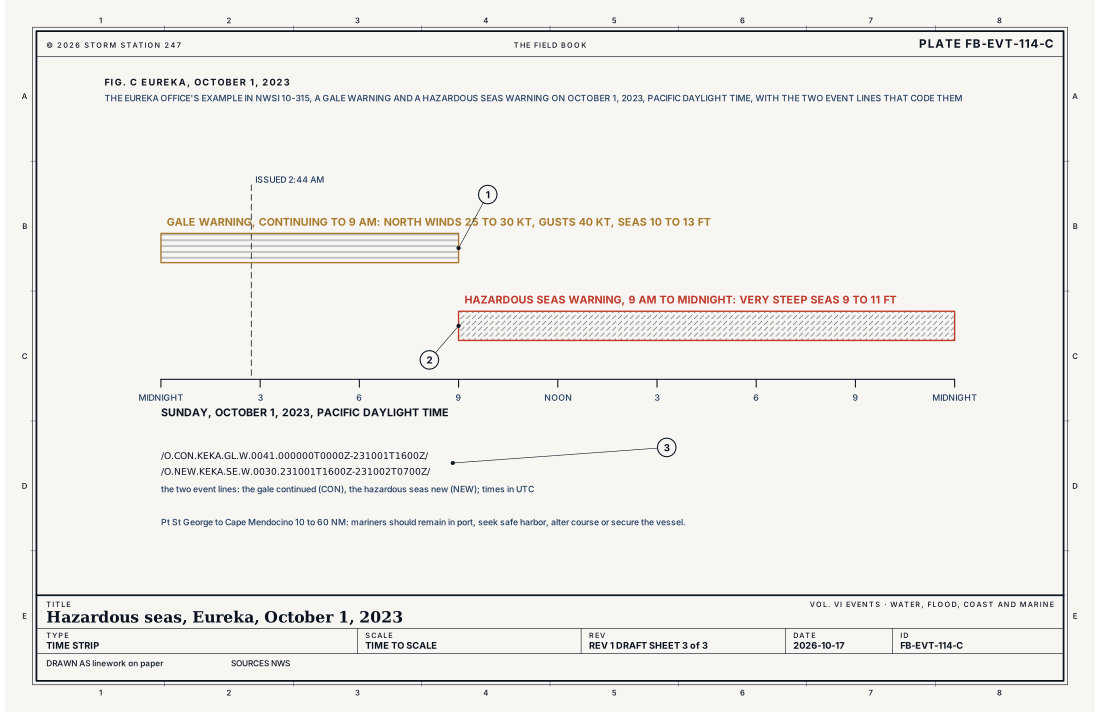
- The Gale Warning, ending at 9 AM (1600 UTC)
- The Hazardous Seas Warning, 9 AM to midnight (0700 UTC October 2)
- The event lines
Ingredients
- Strong wind blowing over the water, raising short, steep seas
- Short wave periods for the height: seas as tall in feet as their period in seconds
- Very high waves of any period
- Long swell slowing and steepening as it reaches shallower water
Scales
- time
- hours to a day or two, while the wind or the swell that makes them lasts
- horizontal
- a forecast zone of the coastal waters, tens of miles out from the shore
- vertical
- waves of several feet to tens of feet, trough to crest
- orlanski
- meso-beta to meso-alpha
Equations
How long a wave is, and how steep
- the wavelength in deep water, the distance from one crest to the next, ft
- the acceleration of gravity, 32.17 ft s⁻² (9.81 m s⁻²)
- the wave period, s
- the steepness, the wave's height over its length
- the wave height, trough to crest, ft
Assumes Linear waves in deep water, deeper than half a wavelength. A wave that reaches shallower water slows and grows steeper while its period stays the same.
Working form A sea of 7 ft (2.1 m) at 7 seconds is 251 ft (76.5 m) long, a steepness of 1/36. A swell of 20 ft (6.1 m) at 20 seconds is 2,048 ft (624 m) long, a steepness of 1/102: nearly three times taller and nearly three times gentler. A wave breaks when its steepness passes 1/7: 35.8 ft (10.9 m) in the 7 second sea's length.
Signatures
- surface
- buoys reporting short wave periods for the wave height; the wind strong and steady over the water
- satellite
- the storm or the strong offshore flow that raises the seas
- radar
- nothing; the waves are far below the beam
- sounding
- nothing direct
Numbers
| Quantity | Value, and the kind of number it is |
|---|---|
| Hazardous Seas Warning | Wave heights and/or wave steepness values meeting or exceeding locally defined warning criteriaStandard, Instruction 10-315 |
| Hazardous Seas Watch | Conditions favorable for a hazardous seas event to meet or exceed Hazardous Seas Warning criteria in the next 12 to 60 hoursStandard, Instruction 10-315 |
| Small Craft Advisory | Seas or waves of 4 ft (1.2 m) and greater, or waves hazardous for their period, steepness or swell direction, by regional and local criteriaStandard, Instruction 10-315 |
| In the West | Small Craft Advisories and Hazardous Seas Warnings are based in part on wave steepnessStandard, Western Region Supplement 12-2003 |
| The Eureka office's warning | From 10 ft (3.0 m) at 8 seconds or less, rising with the period to 16 ft (4.9 m) at 13 seconds; 18 ft (5.5 m) or more at any periodStandard, Western Region Supplement 12-2003 |
| The Medford office's warning | From 10 ft (3.0 m) at 8 seconds or less, rising with the period to 15 ft (4.6 m) at 12 seconds; 18 ft (5.5 m) or more at any periodStandard, Western Region Supplement 12-2003 |
| Square seas | Height and period about equal, such as 7 ft (2.1 m) at 7 seconds, which mariners report as hazardousStandard, Western Region Technical Attachment 03-11 |
| Very high waves | 18 ft (5.5 m) or more counted hazardous whatever their steepness, for the wind's difference between crest and troughStandard, Western Region Technical Attachment 03-11 |
| Long swell near shore | Slows and steepens where it feels the bottom, its period unchanged; an 18 ft (5.5 m) wave of about 16 seconds feels it in about 650 ft (198 m) of waterStandard, Western Region Technical Attachment 03-11 |
| Steepness | The ratio of wave height to wavelength; past 1/7 a wave becomes unstable and begins to breakStandard, Glossary |
| Wavelength in deep water | g times the period squared, over 2 piTextbook, Dean 1991 |
| The directive's example | Eureka, October 1, 2023: very steep and hazardous seas 9 to 11 ft (2.7 to 3.4 m), from 9 AM to midnight PDT, after a Gale WarningStandard, Instruction 10-315 |
How the station sees it
The wave buoys report the wave height, the period and the direction the waves come from, and each beach on this site carries them from its nearest buoy. A short period for the height is the sign of steep seas; the buoys far offshore see a swell before it reaches the coastal waters. Where a Hazardous Seas Warning or Watch is in force, the waters it covers carry it, and each alert has its own report.
- Beaches: every beach, with the waves at its nearest buoy: their height, their period and the direction they come from
- Severe Alerts: every Hazardous Seas Warning and Watch in force, each with its own report
How it is warned
A Hazardous Seas Warning is issued when the wave heights or the steepness meet or exceed the office's warning criteria, and a Hazardous Seas Watch when they are favored in the next 12 to 60 hours. A warning names the height range expected where it can, along with the steepness. Fig. C draws the directive's example from the Eureka office on October 1, 2023: a Gale Warning running out at 9 AM, and a Hazardous Seas Warning from 9 AM to midnight for very steep and hazardous seas of 9 to 11 ft (2.7 to 3.4 m), for the waters from Point St. George to Cape Mendocino, 10 to 60 nautical miles out.
When a Hazardous Seas Warning is in force, alter plans to avoid the hazardous conditions: remain in port, seek safe harbor, alter course, or secure the vessel for severe conditions. Steep seas can capsize or damage a vessel.
| VTEC | Phenomenon | The alerts that carry it |
|---|---|---|
SE | hazardous seas | Hazardous Seas Warning; Hazardous Seas Watch |
See also
- Gale, storm and hurricane force marine wind FB-EVT-113
- High surf FB-EVT-107
- Rip current FB-EVT-108
- Freezing spray FB-EVT-115
- How to read a warning FB-STN-001
Sources
- National Weather Service. Instruction 10-315, Marine Weather Message.
- National Weather Service. Western Region Supplement 12-2003, Marine Weather Services, Appendix A, Wave Steepness Criteria (2020).
- National Weather Service. Western Region Technical Attachment 03-11, Redefining the Small Craft Advisory for Hazardous Seas (2003).
- National Weather Service. Glossary.
- Dean, R. G. and R. A. Dalrymple. Water Wave Mechanics for Engineers and Scientists (1991).
Definition after the Instruction 10-315, Marine Weather Message. Plate FB-EVT-114, revision 1, 2026-10-17. The number is permanent; cite it.