The Field Book
The Field Book
The book of what the map is showing. Nine volumes of plates: each one a drawing, a reading, the numbers and their sources, and the instruments and alerts on this site that it explains.
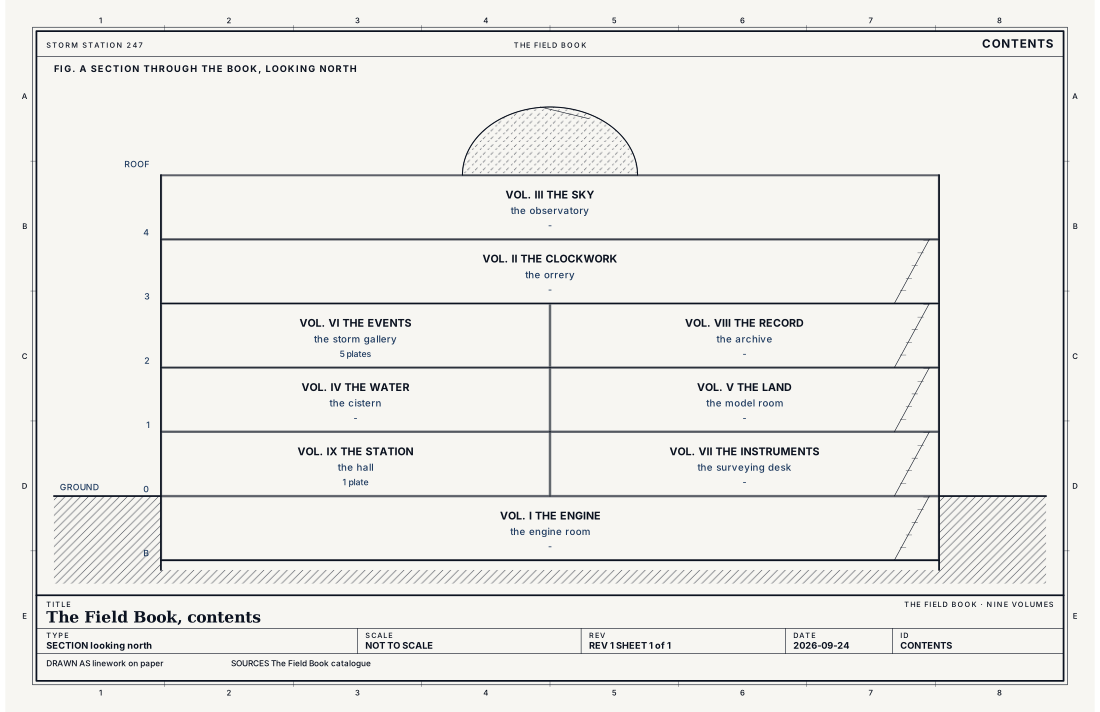
Vol. IThe Engine
Thermodynamics, dynamics, radiation, composition and chemistry. The atmosphere as a machine.
Vol. IIThe Clockwork
Sun, moon, seasons, tides, orbital geometry and time.
Vol. IIIThe Sky
Clouds, optics, electricity and the lights of the upper atmosphere.
Vol. IVThe Water
Phase change, hydrometeors, the hydrologic cycle and the ocean interface.
Vol. VThe Land
Orography, soils, coasts, cities, fire weather fuels and ice.
Vol. VIThe Events
Storms and hazards as machines. Each plate maps onto the alerts the National Weather Service issues.
- FB-EVT-001ThunderstormA thunderstorm is a cumulonimbus that makes lightning. Moist air rises in a column the height of the troposphere, freezes, falls as rain and hail, and separates enough charge to close a circuit through the air. One cell lives about half an hour to an hour.
- FB-EVT-100Flash floodA flash flood is water that rises fast: within six hours of the rain, the dam failure or the ice jam that causes it, and in a steep basin within minutes. It happens where water is gathered faster than the ground and the channel can carry it away, and most of the people it kills are in vehicles.
- FB-EVT-105Coastal floodA coastal flood is the sea standing higher than the land it borders. The tide sets the level, a storm adds to it by pressing the water in with its wind and lifting it with its low pressure, and waves ride on top. The flood comes at high tide.
- FB-EVT-139Fire weatherFire weather is weather that lets a fire start easily and spread fast: dry air that draws water out of the fuel, wind that drives the flame and carries embers ahead of it, and lightning with little rain. A red flag is flown when they meet over fuel already dry enough to burn.
Vol. VIIThe Instruments
How the atmosphere is measured. Each plate binds to the instrument atlas.
Vol. VIIIThe Record
Climate, extremes, quality control and archives.
Vol. IXThe Station
Observation practice, warning doctrine, and how to read what this site draws.