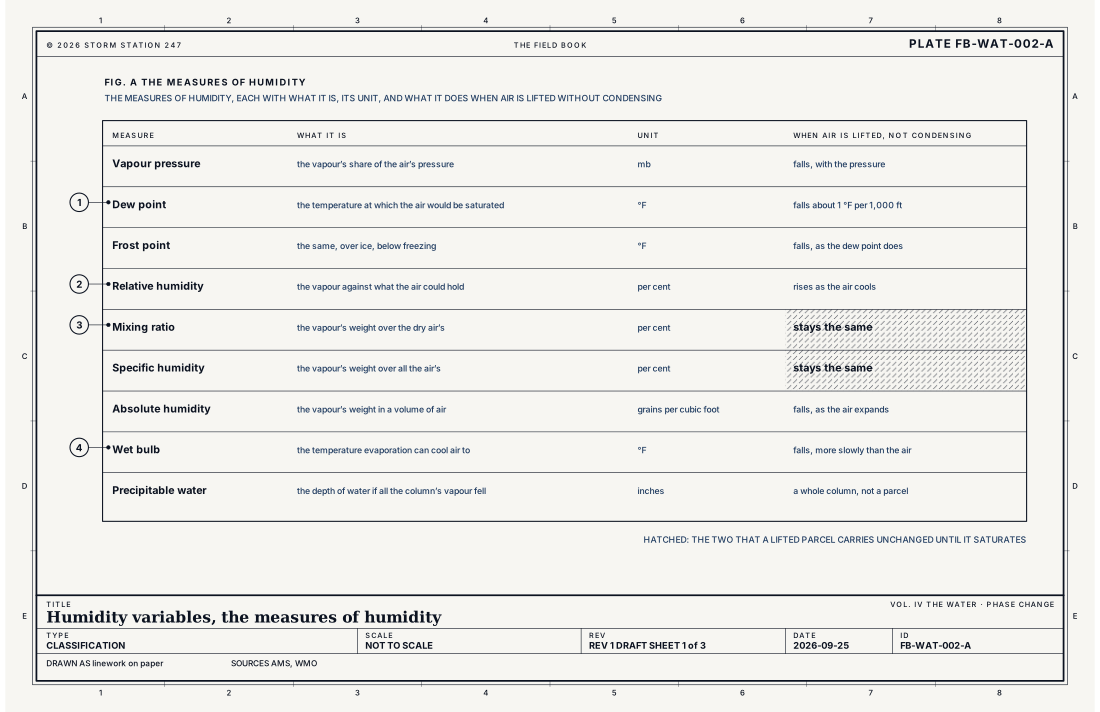
What it is
Humidity has no single measure. Each one answers its own question, and Fig. A sets nine of them side by side. Three do most of the work. The dew point says how much water the air holds. The relative humidity says how close the air is to saturation. The mixing ratio is the vapour's weight against the dry air's, and it is the one a moving parcel carries unchanged. The physics behind all of them is on Water vapour as a gas FB-ENG-011.
What it is not
The relative humidity is not the amount of water. It rises overnight as the air cools and falls in the afternoon as it warms, with the same water in the air all day.
The wet bulb is not the dew point. It lies between the dew point and the air temperature, and equals both only in saturated air.
Lookalikes
- Relative humidity as the amount of water
- It is a ratio: it rises overnight as the air cools and falls in the afternoon while the water in the air stays the same.
- The wet bulb and the dew point
- The wet bulb lies between the dew point and the air temperature; it is the dew point only in saturated air.
The machine
The wet bulb
Wrap a thermometer in wet cloth and blow air over it, and evaporation cools it to the wet bulb temperature. Fig. B works the wet bulb for every temperature and humidity by the psychrometer formula the WMO sets for such instruments. Air at 86 °F (30 °C) and 55 per cent has a wet bulb of 73.4 °F (23.0 °C). The drier the air, the further the wet bulb falls below it. The wet bulb is also the limit to how far sweat can cool a body, Extreme heat, wet bulb and WBGT FB-EVT-131.
Lifted air
Fig. C lifts air from the ground at 86 °F with a dew point of 59 °F (15 °C). As it rises it cools about 5.3 °F every 1,000 ft, and its dew point falls about 1 °F. Its relative humidity climbs from 40 to 97 per cent by 6,000 ft, while its mixing ratio stays at 1.06 per cent. At about 6,210 ft (1.89 km) the two temperatures meet and the air is saturated: that is where the cloud base forms, Lapse rates and stability FB-ENG-005.
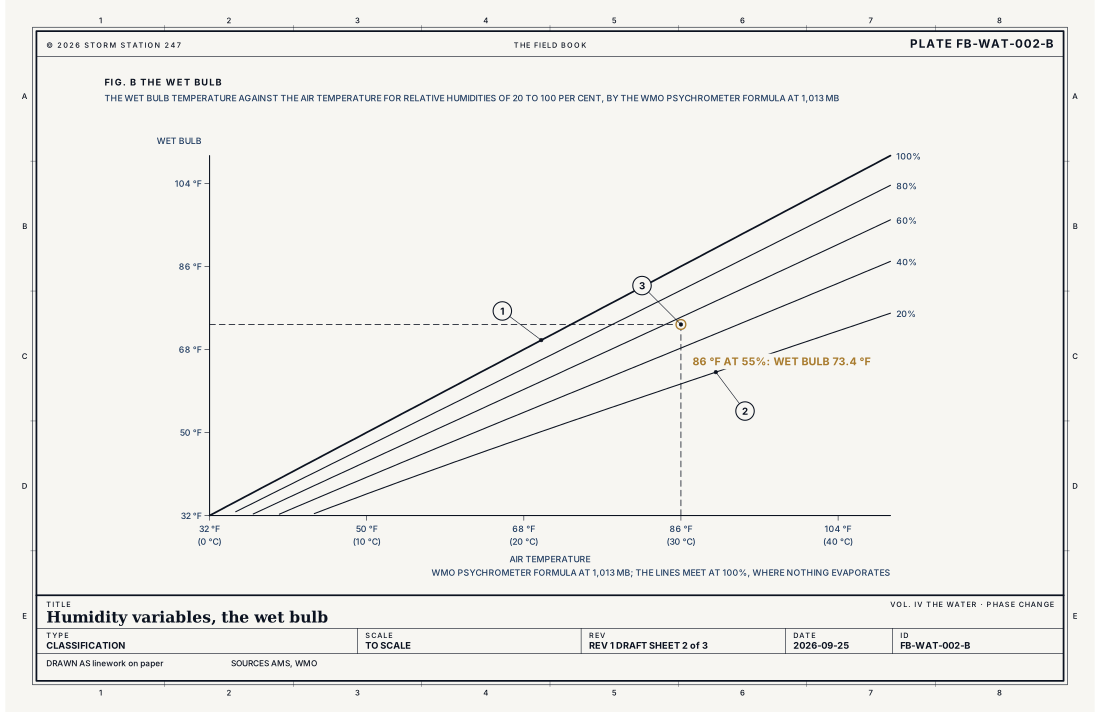
- Saturated, 100 per cent, the wet bulb equal to the air
- Dry air, 20 per cent, the wet bulb far below
- 86 °F at 55 per cent, a wet bulb of 73.4 °F
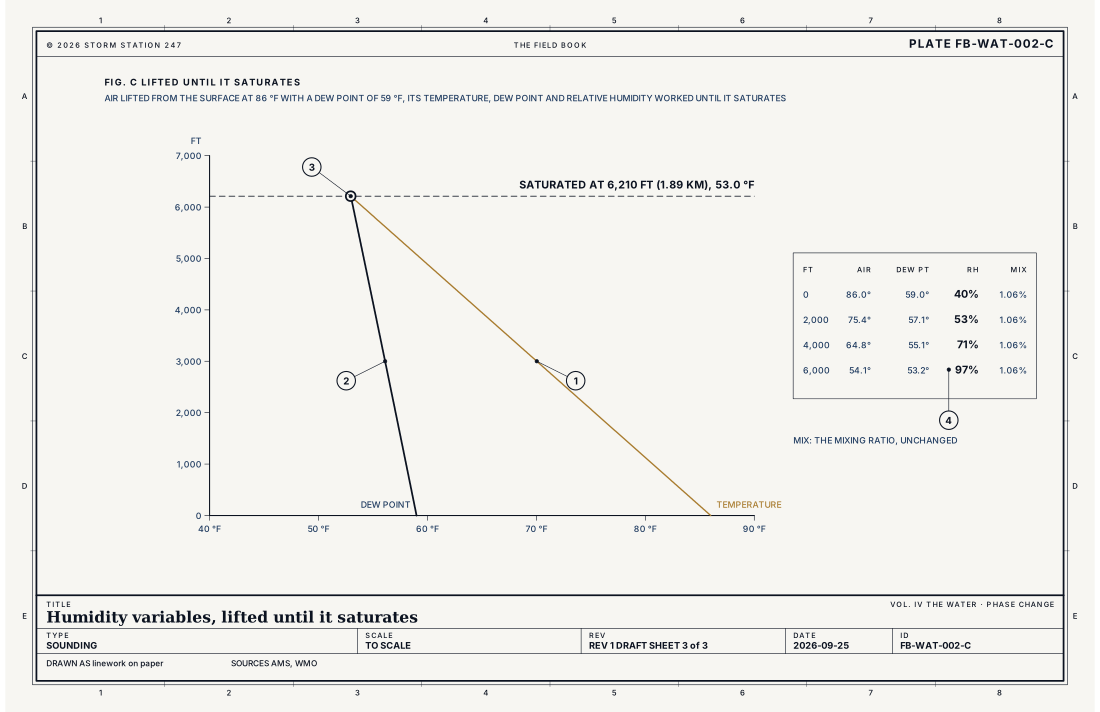
- The temperature
- The dew point
- Where they meet, the cloud base
- The relative humidity climbing, the mixing ratio unchanged
Ingredients
- The water vapour in the air, Water vapour as a gas FB-ENG-011
- The air's temperature and pressure, against which several of the measures are taken
Scales
- time
- a reading at a moment; the dew point changes over hours, the relative humidity with every change of temperature
- horizontal
- a point, a parcel of air, or, for precipitable water, a whole column over one place
- vertical
- from the surface to the top of the moist layer
- orlanski
- micro
Signatures
- sounding
- the dew point line; the gap between it and the temperature; the dewpoint depression; closing where cloud is
- surface
- the dew point and relative humidity each minute at an airport; the wet bulb; worked from them; for heat stress
- satellite
- precipitable water; worked from the microwave and infrared channels
- radar
The numbers
| Quantity | Value, and the kind of number it is |
|---|---|
| Mixing ratio | The weight of vapour over the weight of dry air it is mixed with; unchanged when air rises or sinks without condensingStandard, Glossary of Meteorology |
| Specific humidity | The weight of vapour over the weight of all the air, vapour includedStandard, Glossary of Meteorology |
| Absolute humidity | The weight of vapour in a unit volume of airStandard, Glossary of Meteorology |
| Wet bulb temperature | The temperature air reaches when cooled to saturation by evaporating water into itStandard, Glossary of Meteorology |
| Psychrometer formula | e = e_w(T_w) − 6.53 × 10⁻⁴ (1 + 0.000944 T_w) p (T − T_w), for an aspirated psychrometer, in hPa and °CStandard, Guide to Instruments and Methods of Observation (WMO-No. 8) |
| Precipitable water | The depth of liquid water if all the vapour in a column of air condensed and fellStandard, Glossary of Meteorology |
How the station sees it
An airport station measures the temperature and the dew point each minute, and every other measure on this plate is worked from those two and the pressure.
- Airport weather stations: the temperature and the dew point each minute, from which the other measures are worked
- Road weather stations: the air and the dew point over the road, and the road's own temperature against them
How it is warned
Humidity is not warned alone. It feeds the heat index and wet bulb heat warnings, frost and fog forecasts, and the cloud base every thunderstorm forecast begins with.
See also
- Water vapour as a gas FB-ENG-011
- Lapse rates and stability FB-ENG-005
- Phase changes of water FB-WAT-001
- Fog types FB-WAT-020
- Dew, frost and rime FB-WAT-021
- Heat wave and heat dome FB-EVT-130
- Extreme heat, wet bulb and WBGT FB-EVT-131
- Stevenson screen and siting FB-INS-009
Sources
- American Meteorological Society. Glossary of Meteorology.
- World Meteorological Organization. Guide to Instruments and Methods of Observation (WMO-No. 8).
Definition after the Glossary of Meteorology. Plate FB-WAT-002, revision 1, 2026-09-25. The number is permanent; cite it.