1The wind
ContentsCalm.
From the Field Book
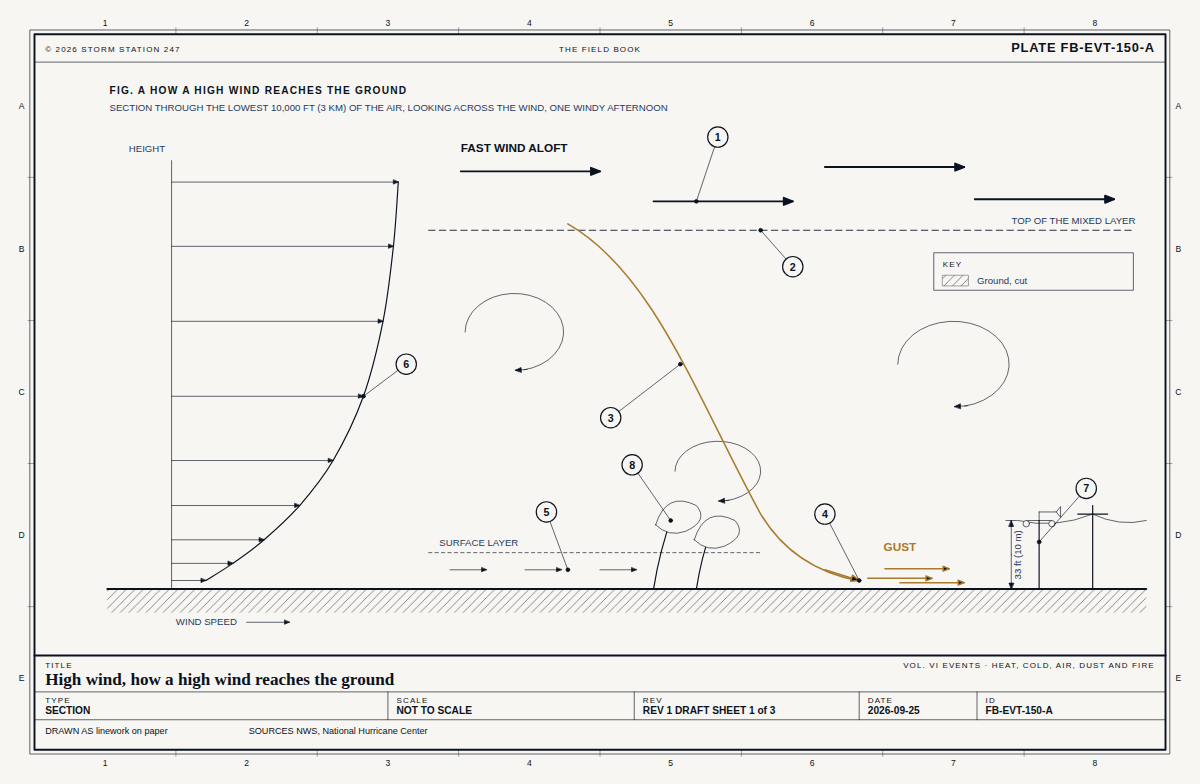 FB-EVT-150, Fig. AHigh wind
Wind at high wind strength: how it reaches the ground.
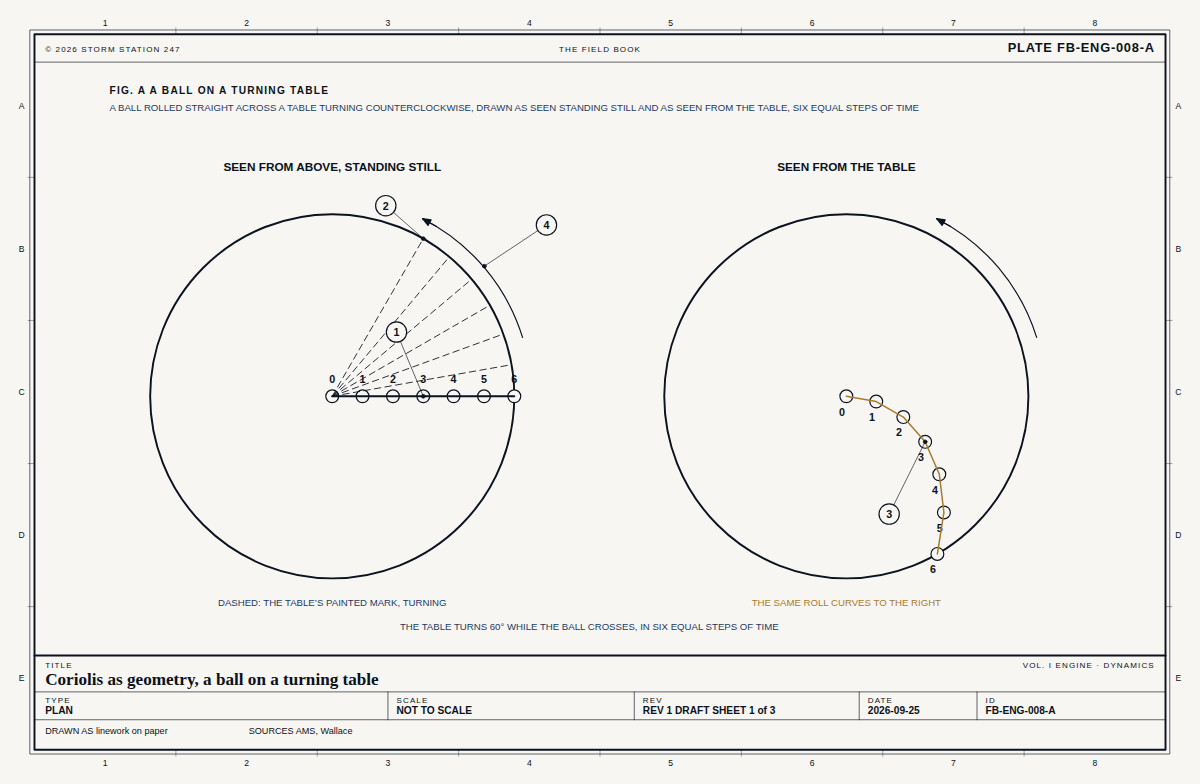 FB-ENG-008, Fig. ACoriolis as geometry
Why large scale winds turn, and blow round a low rather than into it.
Weather/Texas/Instruments/DW1850
In a volunteer observer's own ground
CWOP network, identified by the register
Now, today, and the week
On the radar over Citizen station DW1850ReflectivityStorm topsRain rateRain, last 24 hoursForecast temperatureForecast rain totalEvery picture
Drawn as the kind of place it stands at. 5,497 instruments in Texas stand at one.
-in
Snow on the ground
Station charts
Rank 4,536 of 4,764 in Texas, Oct 11. The 247 rank orders a state's stations by their 247 score out of 100: how reliably they report, how accurate their readings are against a reference station, how their readings pass their checks, and how they stand against the forecast.
247 score67.0of 100
Equal scores are ordered by the share of scheduled reports received, then the reports due in the week (the longer record first), then the median arrival, then the longest silence.
The score is the weighted mean of its six parts, from the last 7 days. How a station is ranked sets out each part.
The reports received are counted from the network's own archive of this station's reports. Its 247 rank is counted from Storm Station's own record, which holds less than 7 days of it so far: 22 of 65 scheduled reports received, 33.8%.
Against its reference: each temperature this station reports is compared with the nearest airport or climate reference station that reported within half an hour, up to 15 miles away. The figure is its reading less the reference's, on average, as both were reported; the typical difference is the root mean square. The difference in height is shown where both heights are known.
| Share of scheduled reports received | Stations |
|---|---|
| 100% | 761 |
| 90 to 99% | 1,229 |
| 80 to 89% | 447 |
| 70 to 79% | 682 |
| 60 to 69% | 224 |
| 50 to 59% | 715 |
| 40 to 49% | 326 |
| 30 to 39% | 118 |
| 20 to 29% | 88 |
| 10 to 19% | 161 |
| 0 to 9% | 13 |
| Day | Rank | Stations ranked | Share received |
|---|---|---|---|
| Oct 11, 2026 | 4,536 | 4,764 | 33.8% |
| Oct 10, 2026 | 4,524 | 4,904 | 27.1% |
| Oct 9, 2026 | 4,535 | 4,902 | 26.0% |
Station report
Drawn from its report of undefined, in the manner of the Field Book, and opened beside the plates that explain each part of it.
Calm.
FB-EVT-150, Fig. AHigh windWind at high wind strength: how it reaches the ground.
FB-ENG-008, Fig. ACoriolis as geometryWhy large scale winds turn, and blow round a low rather than into it.
At 950 ft above sea level, 3 per cent of the atmosphere's air lies below the station. The standard atmosphere puts the pressure there at 28.91 inHg and the temperature at 55.6 F; the station's altimeter setting of 29.93 inHg means its barometer reads 28.92 inHg; it reports 76.0 F, 20.4 F warmer than standard.
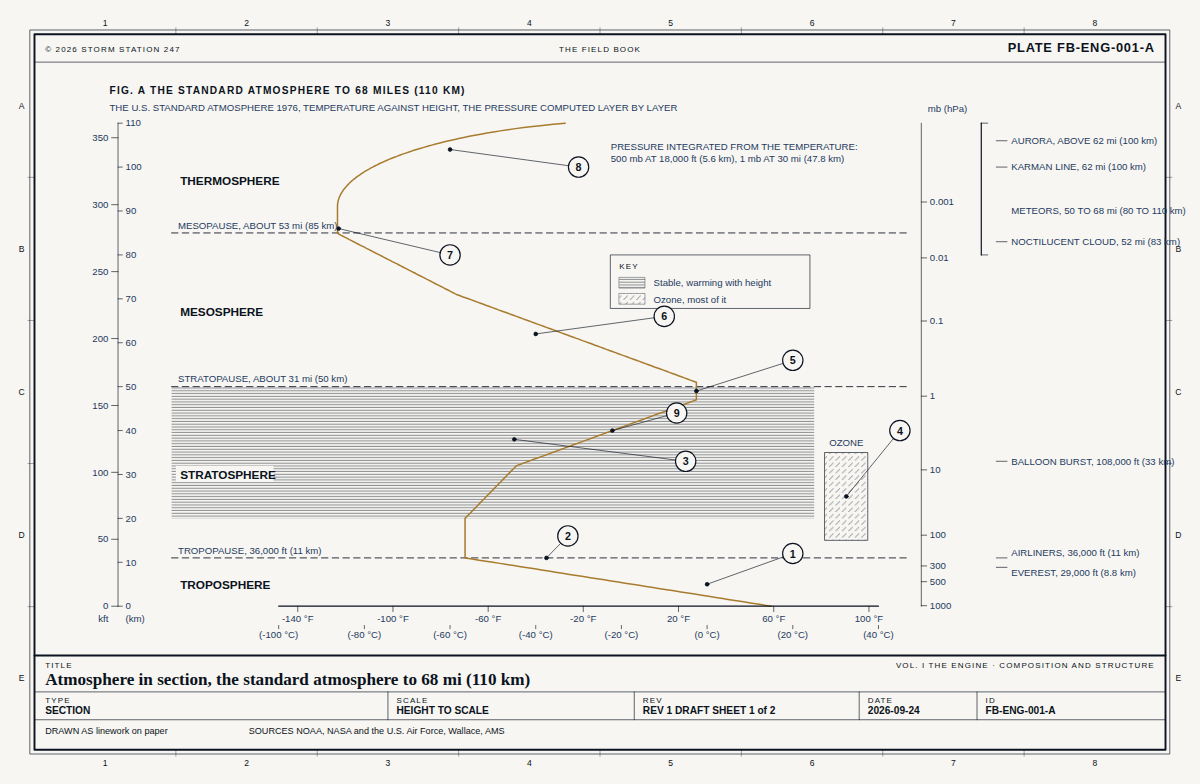 FB-ENG-001, Fig. AAtmosphere in section
The whole standard atmosphere this station stands in, from the ground to the edge of space.
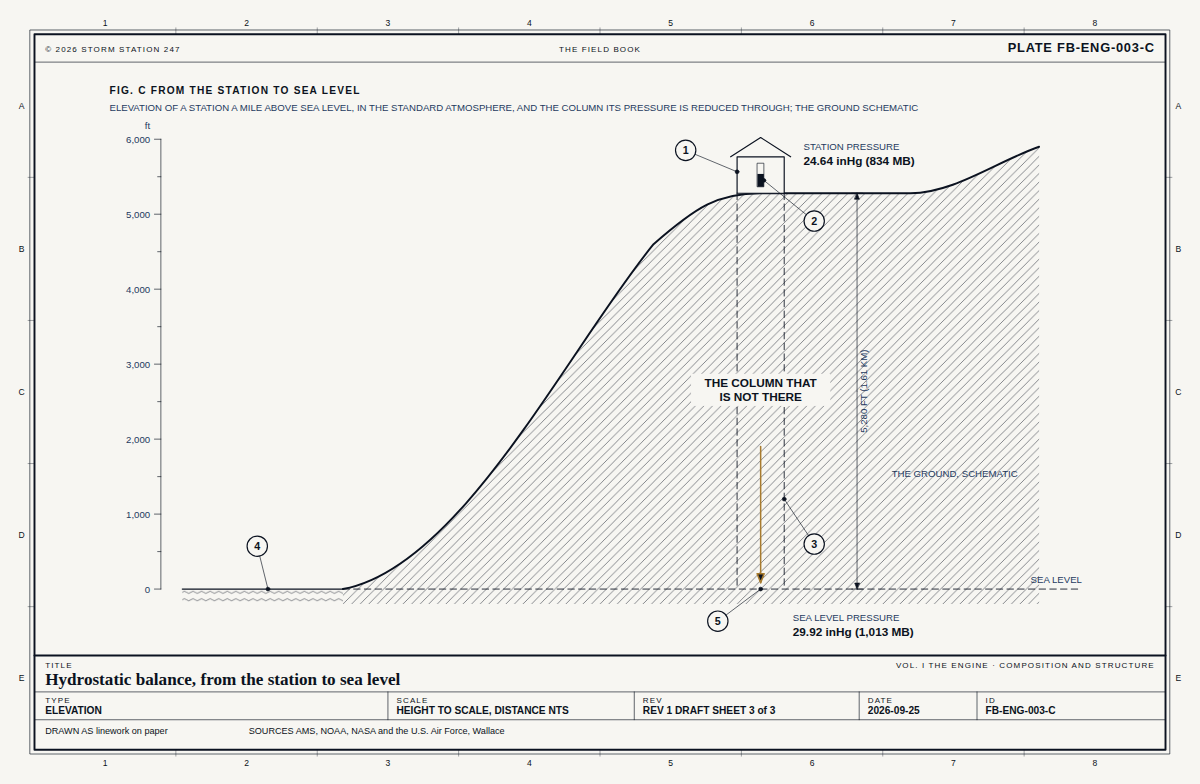 FB-ENG-003, Fig. CHydrostatic balance
Why a barometer 950 ft up reads less: it weighs only the air above it.
On Oct 11 the noon sun stands 52 degrees above the horizon at 30.47 N, and the day is 11 h 26 min long. Level ground there takes 79 per cent of the noon sunlight a surface facing the sun would.
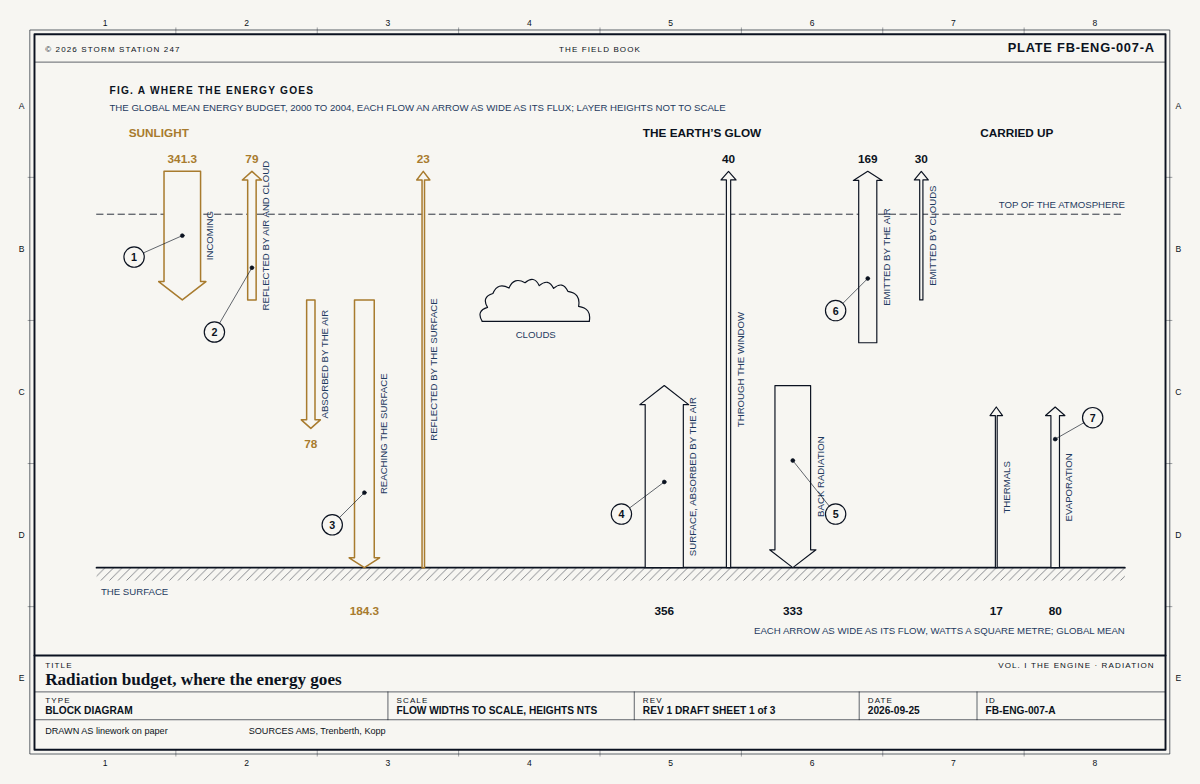 FB-ENG-007, Fig. ARadiation budget
Where the sunlight that reaches this ground goes once it arrives.
A weather instrument, 950 ft above sea level. Its latest report is written on the sensors that made it.
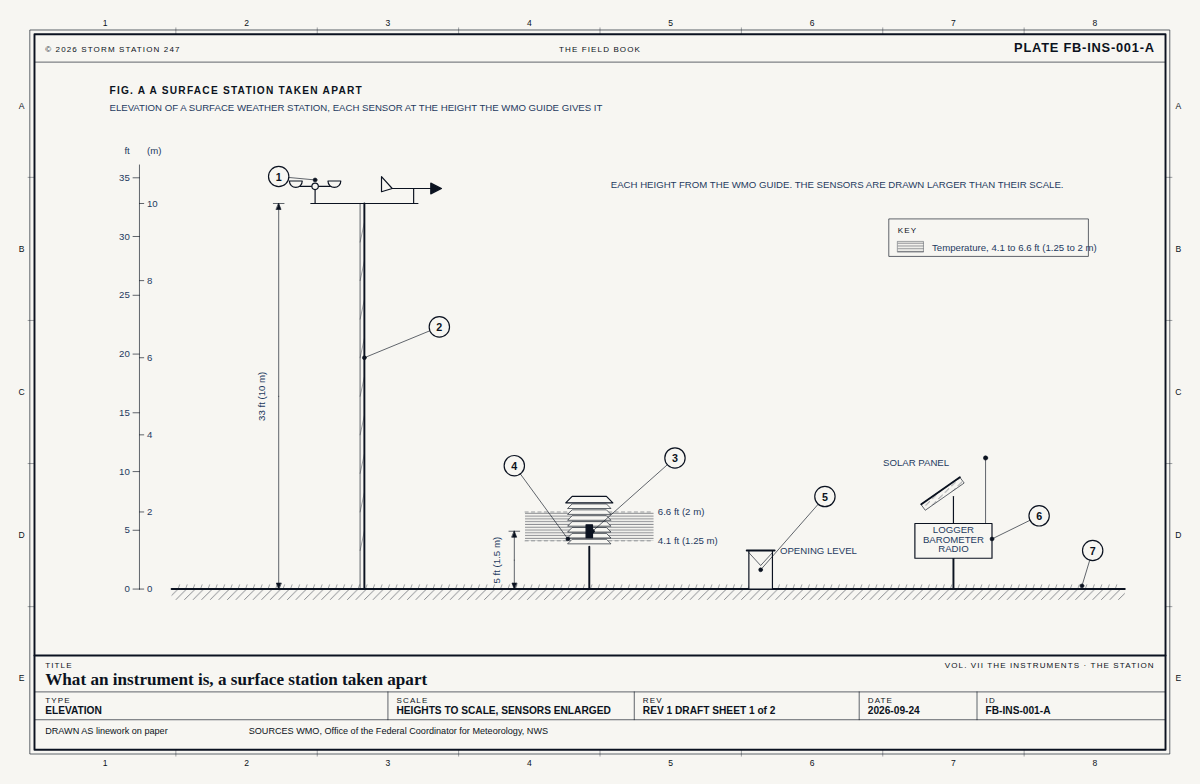 FB-INS-001, Fig. AWhat an instrument is
A surface station taken apart: what each of these sensors is.